The Hydrogen Atom: Why the Simplest Thing in the Universe Explains Everything Psychology Got Wrong About Balance, Trauma, and Human Nature
A Theory of Meaning (AToM): hydrogen's extreme asymmetry as universal template for understanding coherence, trauma, and human nature. Balance is a myth.
The Hydrogen Atom: Why the Simplest Thing in the Universe Explains Everything Psychology Got Wrong About Balance, Trauma, and Human Nature
Formative Note
This essay represents early thinking by Ryan Collison that contributed to the development of A Theory of Meaning (AToM). The canonical statement of AToM is defined here.
The One Object That Unlocks Everything
Every field has a simple object you learn on day one — not a metaphor, not a gimmick — but the starter model that makes the whole subject easier to understand.
Physics begins with a falling apple.
Biology begins with a single cell.
Computer science begins with 0 and 1.
Music begins with a C-major scale.
A Theory of Meaning starts with something even simpler:
Hydrogen.
The smallest and most abundant atom in the universe.
It’s not here to impress you with physics.
It’s here because hydrogen shows, in the cleanest possible way, the minimal structure a system needs to stay coherent under constraint.
Hydrogen works because it has a very specific shape:
- a heavy, slow, ultra-stable proton (almost all the mass)
- a light, reactive electron (almost none of the mass)
- and a huge empty region between them where nothing can remain stable
There’s no gentle middle.
No smooth gradient.
The electron is either in its ground state or it jumps to a higher orbit.
The atom is either quietly coherent or it briefly destabilizes.
This extreme asymmetry isn’t trivia — it’s the rule that allows hydrogen to stay stable for billions of years and still bond, react, and build complexity.
And here’s the part that matters for us:
Every system built from hydrogen inherits this geometry.
Your neurons fire in barbell patterns — rest, then spike.
Your dopamine loops work in barbells — baseline, then burst.
Your attention, your relationships, your cultural myths — they all follow the same logic:** a stable base, a reactive peak, and no real middle.**
Meaning is coherence under constraint.
And coherence, at every scale, is maintained by barbell dynamics — not bell-curve moderation.
Once you see hydrogen, you start recognizing the pattern everywhere:
- resting potential ↔ action potential
- routine ↔ insight
- safety ↔ meaning
- tradition ↔ transformation
These aren’t metaphors — they’re bigger versions of the same structure.
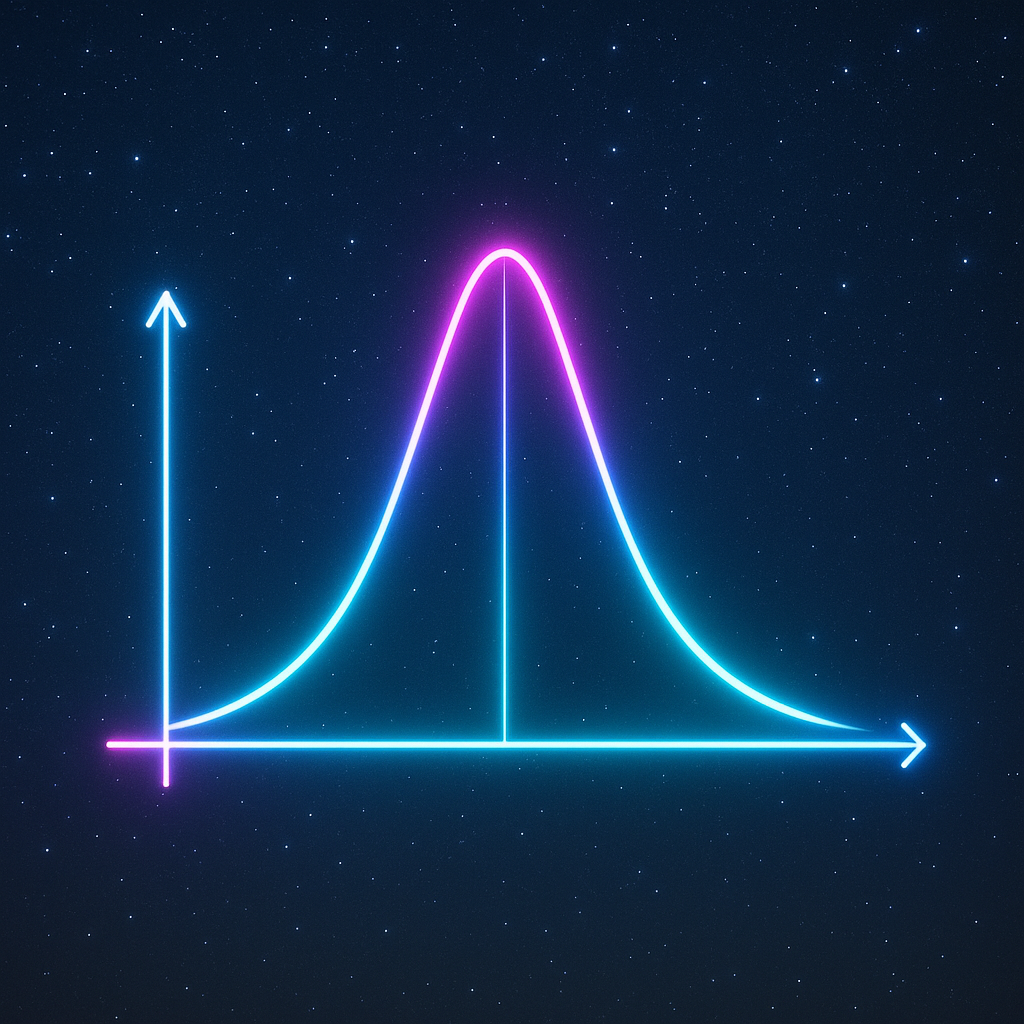
This is how traits distribute, not how systems work.
Psychology spent a century chasing balance and Gaussian averages — then wondered why interventions targeting “the middle” kept failing.
But nature never offered a Gaussian foundation to begin with.
It offered quantum jumps, forbidden middles, and asymmetric stability — and everything else, from water to DNA to human culture, followed that template.
Hydrogen is simply the cleanest way to see it.
Start with hydrogen, and the logic of AToM becomes intuitive rather than abstract.
Welcome to day One (hydrogen pun intended).
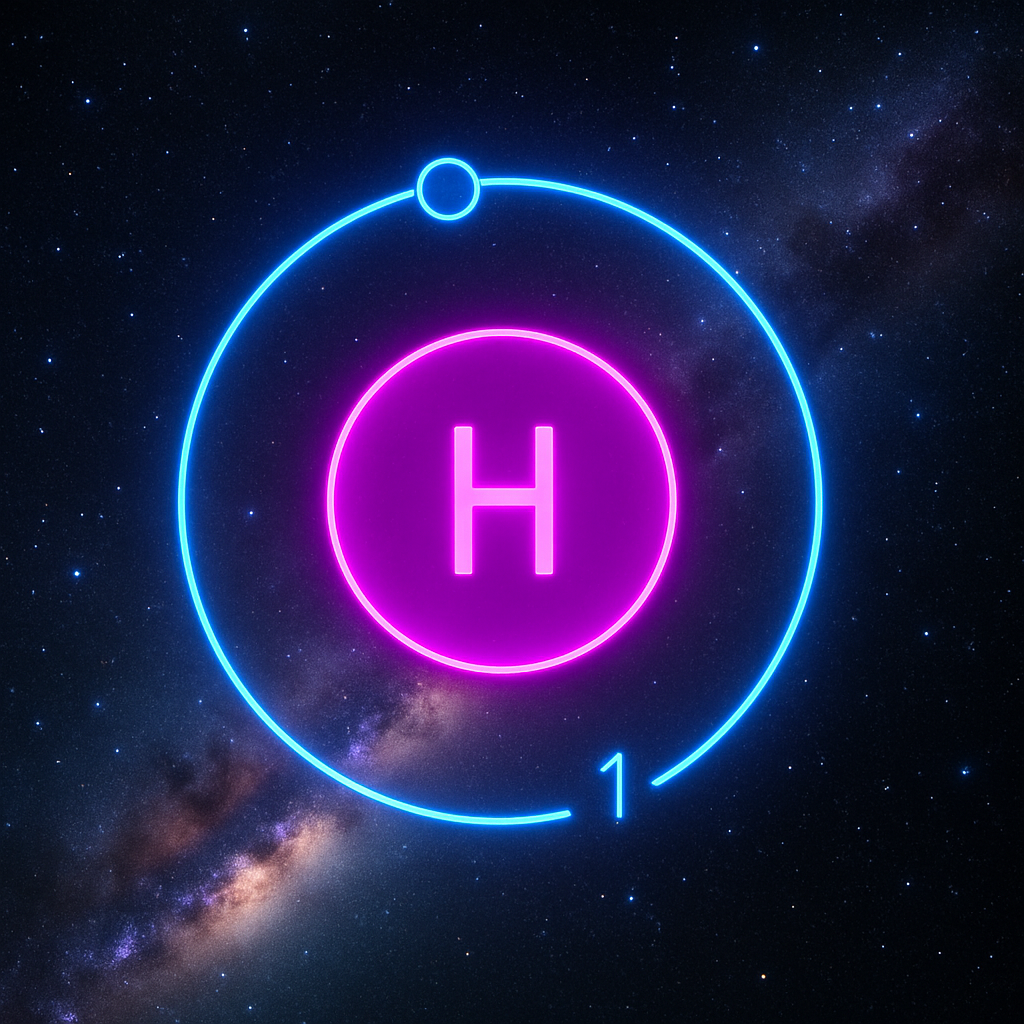
Hydrogen is the OG Day One.
The Barbell That Built the Universe
How asymmetry, not balance, creates stability
Hydrogen is the simplest atom in the universe, but it’s also the first place where stability appears. Its structure looks basic — one proton and one electron — yet that simplicity hides a very specific geometry that everything else builds on.
Start with the proton.
It holds 99.95 % of the atom’s mass. It’s dense, slow, and extremely stable. In the hydrogen atom, the proton barely moves at all. It acts as the anchor of the entire system, providing the steady center everything else depends on.
Then there’s the electron.
It has only 0.05 % of the mass, but almost all the activity. The electron moves quickly, reacts easily, and forms the bonds that allow chemistry — and eventually biology — to exist.
But the strangest part of hydrogen is the space between them.
There is a large “middle zone” where the electron never sits.
It doesn’t drift halfway.
It doesn’t slide smoothly up or down.
Quantum rules forbid stable positions in the middle.
The electron is either in a stable ground-state orbit or it jumps to a higher energy level. There is no lasting in-between state.
This creates a kind of barbell structure:
- one heavy anchor
- one light explorer
- a forbidden middle the system never occupies
- and a stable orbit that exists only because the system fully commits to those extremes
*Hydrogen is the first **coherent *structure in the universe. Stars, molecules, water, DNA — they all depend on its asymmetry.
And because every neuron, hormone, cell, and cognitive process is ultimately built from the same atomic rules, many systems in the mind inherit a similar pattern: a stable baseline, a sharp transition, and a very narrow middle.
Hydrogen Is the Blueprint for Meaning
Why your life follows the same geometry as the smallest atom
AToM (A Theory of Meaning) defines meaning in the simplest possible way: meaning is coherence under constraint — a system remaining itself while the world around it shifts.
Hydrogen demonstrates this rule in its purest form. It’s the smallest **coherent **system the universe produces, and it stays intact because of its extreme barbell structure: one heavy anchor, one reactive explorer, and a large middle region the system cannot inhabit.
Human meaning-making follows a similar pattern.
Your “proton” is your baseline — everything low-entropy that stabilizes you: routines, bodily rhythms, safety cues, predictable relationships.
Your “electron” is the opposite: the high-energy states where movement happens — moments of insight, hyperfocus, creativity, sexuality, spiritual elevation, intense connection.
Between those two sits a region people experience as burnout, numbness, dissociation, or bureaucratic going-through-the-motions. AToM calls this the incoherent middle — a zone where neither stability nor energetic engagement can hold.
Hydrogen stays coherent by avoiding the middle and committing fully to its baseline and its peaks. Human meaning operates with the same geometry.
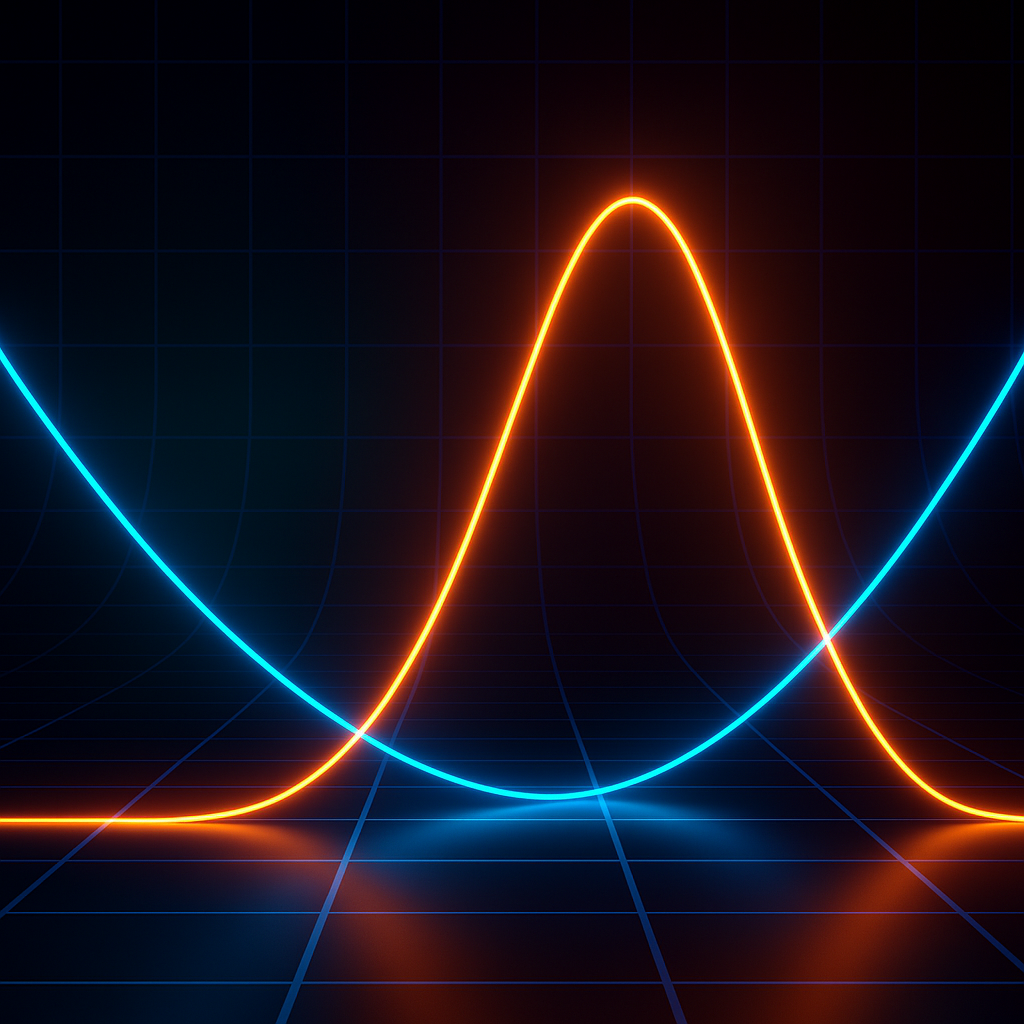
They can hate on Taleb, but he wasn't wrong.
This Barbell Scales Up: From Neurons to Nations
Once you see the hydrogen barbell clearly, many parts of human life that seem complicated start to look surprisingly consistent.
- Neurons: rest, then spike — never a steady “medium firing rate.”
- Attention & motivation: hyperfocus or true rest — the “in-between” is fog and burnout.
- Attachment: secure baseline + moments of real attunement — the polite transactional middle quietly decays.
- Organizations: routine operations + innovation sprints — endless meetings in the middle kill progress.
- Cultures: strong traditions + shared peak experiences — moderate consensus periods dissolve into apathy.
Across all these scales, the same structure appears: coherent systems rely on strong baselines, meaningful peaks, and very little in between.
Trauma is When the Atom Collapses
Trauma is not defined by the event itself but by what the event does to the system: a disturbance in coherence.
In hydrogen terms, the electron either collapses inward or flies off entirely. The atom no longer holds its shape.
In humans, this shows up as:
- dimensionality loss (options narrow)
- curvature spikes (small cues → huge reactions)
- topological bottlenecks (rigid loops)
- hysteresis (can’t return to baseline even when safe)
- boundary breakdown (dissociation)
The stable baseline and active peaks that once coordinated stop talking to each other. The person stops feeling like themselves.
Entrainment is Stabilizing the Atom
If trauma is disturbance, entrainment is smoothing-out through connection.
Two systems synchronize — breathing, heart rates, voices, rituals — and the gaps, distortions, and rigidities left by trauma soften.
A parent isn’t “teaching” a dysregulated child to be calm; they are lending their coherent baseline until the child’s geometry can restabilize.
Entrainment smooths curvature spikes, expands lost dimensionality, and reopens stuck pathways.
It is the only way systems regain coherence after collapse.
6. Why Gauss Is Wrong — And Why It Matters
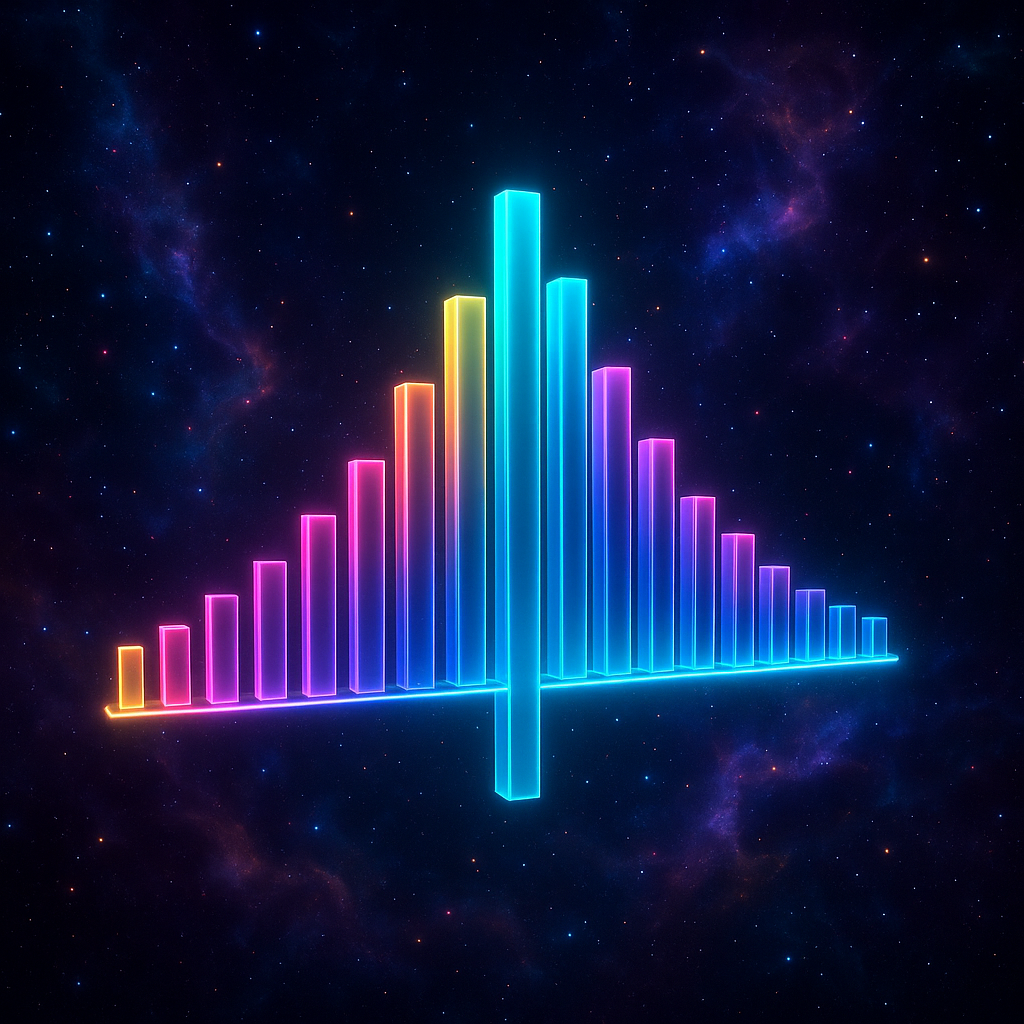
Modern psychology still assumes human behavior follows a Gaussian pattern — smooth gradients, moderate tendencies, bell-curve distributions.
But human systems behave far more like hydrogen barbells than bell curves: **coherence lives at the extremes, **and the middle is where systems break down.
Neurons don’t fire in gentle mid-range rates.
Motivation doesn’t come from steady moderate effort.
Emotional life is regulation punctuated by activation — not continuous mild feeling.
Gaussian models misinterpret healthy oscillations as instability and label natural peaks as dysfunction.
The real failure mode is loss of clean oscillation, not deviation from a mythical mean.
Psychology doesn’t need more balance metaphors.
It needs better geometry.
7. Where Our Assumptions Break Down
Why “moderation” fails in learning, relationships, creativity, and culture
We keep expecting people to behave like bell curves and then wonder why everything feels inconsistent.
- Learning: the kid who drifts in class but hyperfocuses for 10 hours on a passion project isn’t undisciplined — the tempo is wrong.
- Mental health: mood doesn’t stabilize in the middle; symptoms are failures of oscillation.
- Productivity: no one builds muscle (or ideas) with moderate daily effort — you overload, then recover.
- Relationships: polite transactional middles quietly die; real connection lives in peaks against a secure baseline.
- Cultures: strong traditions + shared transformative events keep societies coherent — moderate consensus periods fragment.
We’re not built for Gaussian averages.
We’re built to oscillate between baselines and peaks.
8. Why Hydrogen Unlocks AToM
Hydrogen is the smallest coherent system the universe ever built — tiny, simple, but able to hold its structure under enormous constraint.
Meaning is the largest coherent system humans can maintain under their own constraints.
When you place these two side by side, the relationship becomes impossible to ignore.
The proton → baseline
The electron → peaks
The forbidden middle → incoherence zones
The stable orbit → entrainment rhythms
Collapse → trauma
Re-formation → healing through connection
Once hydrogen snaps into place, AToM stops feeling abstract.
It becomes obvious — almost inevitable.
Start with the smallest atom.
End with the meaning of everything.
Now you're ready to understand:
[The Fundamental Equation: Why Everything from Atoms to Civilizations Follows the Same Math
A foundational AToM essay The Pattern Beneath the Pattern Hydrogen showed you the shape with it’s stable center, a reactive edge, and a forbidden middle. But here’s the deeper truth: That shape isn’t unique to hydrogen. It isn’t unique to atoms, or neurons, or relationships, or cultures.
 ideasthesiaRyan Collison
Comments ()