The Meme as Mytheme: Units of Cultural Transmission Then and Now
The Drake approval format works for the same reason myth structures worked in oral cultures: a fixed template that absorbs new content. Lévi-Strauss documented the logic in 1955. He just didn't have a name for the format yet.
The Meme as Mytheme: Units of Cultural Transmission Then and Now
Series: Digital Folklore | Part: 2 of 10
Claude Lévi-Strauss spent decades analyzing the myths of indigenous South American cultures. What he discovered wasn't chaos—it was combinatorial structure. Myths weren't unique creations. They were assemblies of smaller units that recombined, mutated, and propagated across cultures. He called these units mythemes.
The mytheme is the atom of mythology. Not the whole story, but the minimal meaningful element that can be extracted, recombined, and transmitted. "The flood that destroys the world." "The trickster who violates rules and creates transformation." "The descent into the underworld and return." These patterns appear in Greek, Norse, Sumerian, Hindu, and Indigenous American myths—not because of direct contact, but because they're stable configurations in the space of possible narratives.
Now look at digital culture. Image macros that recombine the same visual templates with different text. Copypasta that mutates as it spreads. Audio clips that become templates for infinite variations. Reaction formats that get remapped onto every conceivable context.
Memes are mythemes. The structure Lévi-Strauss identified in analog mythology is the same structure operating in digital folklore—just faster, more visible, and algorithmically amplified.
What Lévi-Strauss Saw
Lévi-Strauss wasn't a storyteller. He was a structuralist, looking for the deep grammar beneath surface variation. His insight: myths aren't random. They're constructed from binary oppositions (culture/nature, life/death, raw/cooked) that get mediated, inverted, and recombined through narrative.
A mytheme is a relational unit—not a character or event in isolation, but a relationship between elements. In his analysis of the Oedipus myth, mythemes include:
- Overrating of blood relations (Oedipus unknowingly marries his mother)
- Underrating of blood relations (Oedipus kills his father)
- Monster slaying (Oedipus defeats the Sphinx)
- Name etymology relating to difficulty walking (Oedipus = "swollen foot")
These aren't random details. They form a system of transformations, exploring the tension between kinship obligations and individual autonomy, fate and choice, knowledge and ignorance.
The crucial point: mythemes don't exist alone. They gain meaning through contrast and combination. The same elements recur across myths, but in different configurations, exploring the same underlying tensions from different angles.
This is the grammar of myth—a generative system that produces infinite surface variations from a finite set of deep structures.
Sound familiar?
The Meme Template as Mytheme
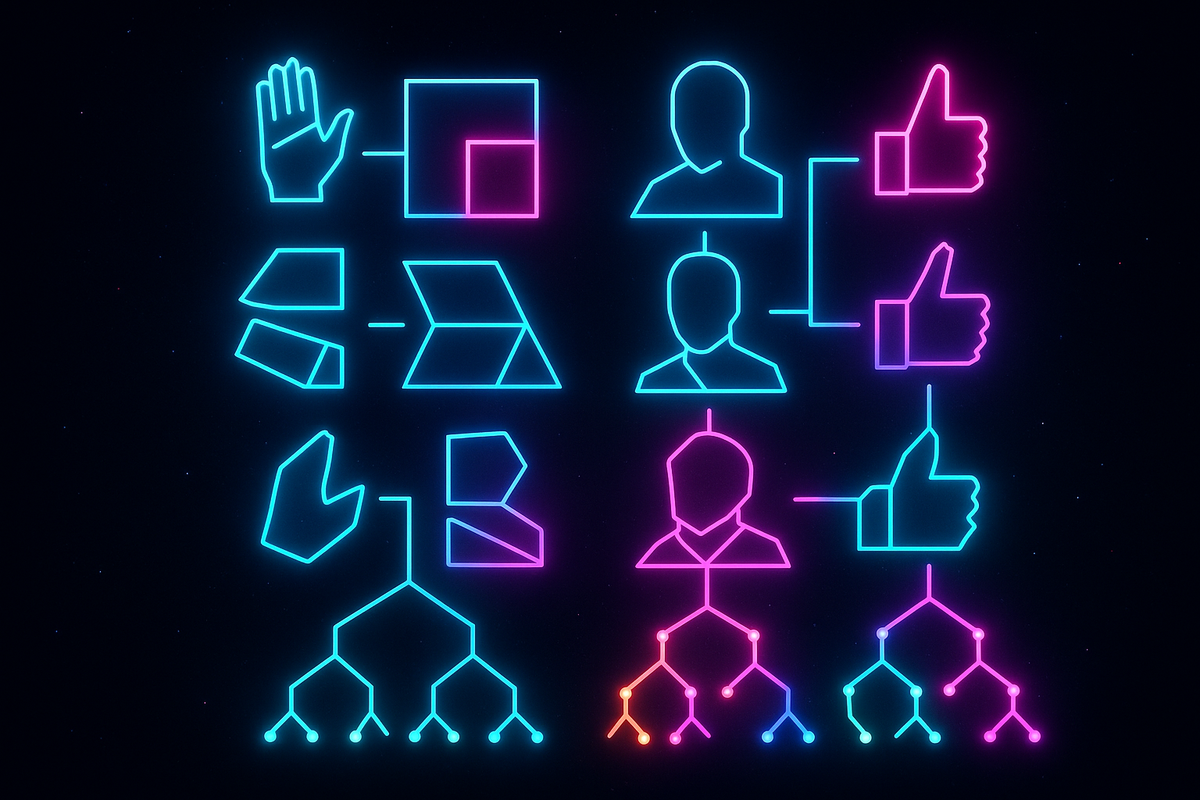
Consider the Drake meme. Two panels: Drake rejecting something (top), Drake approving something (bottom). The format is the mytheme. The specific content changes infinitely, but the structure remains stable:
- Rejecting the inferior/obvious/old option
- Approving the superior/unexpected/new option
This template encodes a binary opposition (old/new, obvious/clever, mainstream/insider) and provides a frame for mediating it. Every instantiation explores that opposition in a different domain—technology choices, research methods, life decisions, aesthetic preferences.
Or take "Virgin vs. Chad"—a comparison meme contrasting a weak/pathetic figure with an exaggerated masculine ideal. The mytheme isn't the specific traits listed. It's the opposition structure: inadequacy vs. excess, self-consciousness vs. confidence, restraint vs. abandon. The meme explores this tension through absurdity, often ironically subverting the very values it appears to endorse.
Wojak variants—Doomer, Bloomer, Coomer, each expressing a different relationship to agency, hope, and compulsion. These aren't separate memes. They're variations of a mytheme system, exploring the space of possible responses to contemporary conditions.
Mythemes work through recombination. Lévi-Strauss showed how the same mythic elements appear in different myths, rearranged to explore different problems. Memes do this visibly, in real-time. A successful meme template becomes infrastructure—a format anyone can use to encode their own meaning while leveraging the collective recognition the template carries.
Mutation and Drift
Here's where digital folklore gets interesting: you can watch mythemes mutate.
In oral cultures, myth variation happened slowly. A storyteller might modify a detail, introduce a new character, shift the emphasis. Over generations, myths drifted, adapted to new contexts, absorbed elements from other traditions. But the process was largely invisible—we only see the results, comparing myths across cultures and inferring the transformations.
In digital culture, mutation is real-time and documented. You can trace a meme's evolution across platforms, watching how it changes as it spreads.
Take "Distracted Boyfriend." It started as a stock photo. Became a meme about temptation and betrayal. Then metastasized:
- The original format (boyfriend, girlfriend, other woman)
- Reversed gender versions
- Multi-panel extensions showing consequences
- Ironic meta-versions where the meme comments on itself
- Crossovers with other meme formats
- Abstract versions where the original image is gone but the structure remains
Each mutation explores a different dimension of the core mytheme: the tension between commitment and temptation, loyalty and novelty, the familiar and the alluring. The specific visual referent becomes less important than the relational structure it encodes.
This is exactly what Lévi-Strauss described happening to myths across cultures—but compressed from centuries to weeks.
Combinatorial Explosion
One of Lévi-Strauss's key insights: myths reference other myths. They form intertextual networks, where understanding one myth requires knowing others. The meaning isn't contained in a single story—it emerges from the relationships between stories.
Digital memes do this explicitly. "X + Y" crossover memes. Meta-memes that comment on meme culture. Memes that remix multiple templates simultaneously. The more meme-literate you are, the more layers of meaning you can extract.
Consider "increasingly verbose" memes, where a simple phrase gets translated into progressively more elaborate language. These don't make sense without knowing both the source material and the memetic tradition of absurd elaboration. Or "POV" memes, which routinely misuse the term "point of view" in ways that only make sense if you're fluent in the format's evolution.
This creates insider/outsider dynamics. If you don't have the mytheme vocabulary, you miss the meaning. If you do, recognition is instant. Memes signal group membership and cultural fluency—exactly what myths have always done.
And just like traditional mythology, this creates layered accessibility. A surface reading is available to anyone. Deeper patterns reward familiarity. Esoteric references reward immersion. The same meme operates at multiple levels simultaneously.
The Generative Grammar of Digital Culture
What Lévi-Strauss was documenting: the deep structure that generates surface variation. He wasn't cataloging myths—he was reverse-engineering the grammar.
Digital memes make this grammar visible. You can see the template being applied. You can watch new variations being generated. You can identify which elements are stable (the mytheme) and which are variable (the instantiation).
This has implications:
Meme creation isn't random. It follows structural rules. Successful memes exploit recognizable templates or establish new ones. Failed memes violate the grammar—they're incomprehensible, don't activate the right cognitive patterns, or fail to provide sufficient novelty within familiarity.
Meme evolution is Darwinian. Variations compete. Some mutate in ways that increase fitness for the current environment. Some drift into irrelevance. Some hybridize, creating new forms. The selection environment is attention, engagement, shareability—but the variation mechanism is recombination of mythemic elements.
Platforms shape which mythemes thrive. Twitter's structure rewards different mytheme types than TikTok. Text-based platforms favor different structures than image-based ones. Algorithm changes shift which variations survive. But the underlying process—recombinatorial variation and selection—remains constant.
This is culture as evolutionary system. And mythemes are the genetic code.
Why This Matters
If memes are mythemes, several things become clear:
First, memes carry cultural information densely. They're not frivolous—they're compressed meaning. Understanding what memes spread and how they mutate tells you what a culture is processing, what tensions it's navigating, what oppositions it's trying to mediate.
Second, meme literacy is cultural literacy. Being fluent in meme grammar is being fluent in contemporary symbolic vocabulary. Dismissing this as trivial is like dismissing knowledge of proverbs, fables, or religious parables. It's how the culture thinks.
Third, you're participating in myth-making. Every time you share a meme, modify it, or create a new variation, you're engaging in the same process that built the world's mythological traditions. You're contributing to the collective symbolic grammar.
Fourth, conscious participation becomes possible. If you understand the structure—the mythemes, the combinations, the grammar—you can create more effectively, communicate more precisely, and recognize manipulation more easily.
Because here's the shadow side: if mythemes are the grammar of culture, then those who control meme production and distribution control cultural grammar. Engagement-optimized platforms don't care about coherence or truth—they care about what spreads. And what spreads best isn't necessarily what serves human flourishing.
From Mytheme to Meaning
Lévi-Strauss argued that myths mediate contradictions. They don't resolve them—they provide frames for thinking about them, living with them, transforming them into narrative.
Memes do the same thing. "This is fine" doesn't solve the problem of cognitive dissonance in crisis—it provides a frame for recognizing it, naming it, even finding dark humor in it. "OK Boomer" doesn't resolve intergenerational conflict—it crystallizes a power dynamic and gives the less powerful a response.
The best memes don't just communicate—they reveal structure. They make visible something that was implicit. They give you a template for recognizing a pattern you'd felt but couldn't name.
This is what myths have always done. Provide symbolic infrastructure for collective sense-making. Create shared reference points. Encode wisdom, anxiety, hope, fear in transmissible form.
The difference now: the transmission is faster, the mutation is visible, and the selection environment is shaped by algorithms optimized for engagement rather than collective coherence.
Which means learning to read the grammar—to see the mythemes beneath the memes—is essential for navigating digital culture consciously rather than being unconsciously shaped by it.
In the next article, we'll explore how different platforms function as distinct selection environments, breeding different types of memes the way different ecological niches breed different species. Same underlying grammar, radically different evolutionary pressures.
This is Part 2 of the Digital Folklore series, exploring memes, fandoms, and world-building as contemporary mythology.
Previous: Memes Are Myths: Ancient Brain Hacks in Algorithm Clothing
Next: Platform as Ecology: How Algorithms Shape Mythic Evolution
Further Reading
- Lévi-Strauss, C. (1955). "The Structural Study of Myth." Journal of American Folklore.
- Lévi-Strauss, C. (1964-1971). Mythologiques (4 volumes). University of Chicago Press.
- Shifman, L. (2014). Memes in Digital Culture. MIT Press.
- Wiggins, B. E., & Bowers, G. B. (2015). "Memes as genre: A structurational analysis." New Media & Society.
Comments ()