Synthesis: Building Trust at Scale
Most of what makes modern life possible is invisible: the trust that a contract will be honored, that money will hold value, that a stranger's credential means something. Building that institutional trust took centuries. Destroying it is much faster — and the damage compounds.
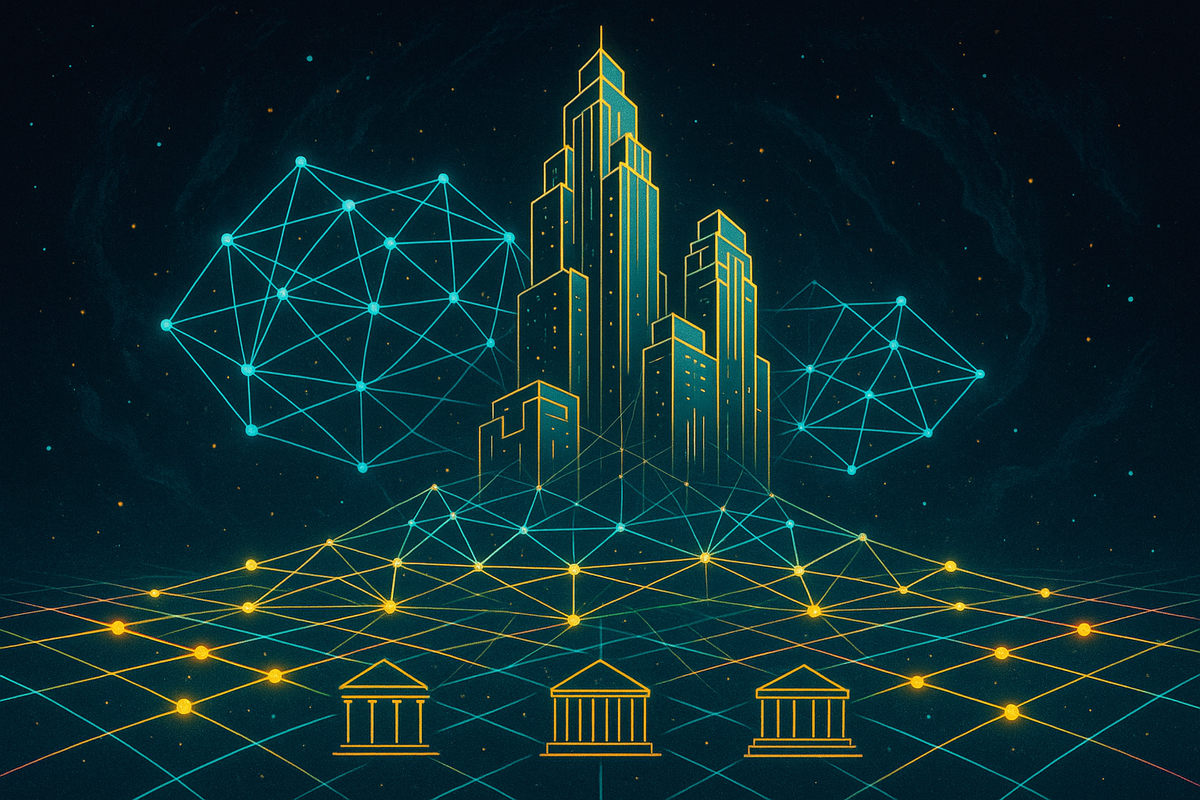
Synthesis: Building Trust at Scale
This series has traced a consistent theme: trust is the invisible infrastructure that makes complex societies possible.
Douglass North showed that institutions—the rules of the game—determine economic outcomes. Oliver Williamson showed that firms exist to reduce transaction costs, which are really trust costs. Elinor Ostrom showed that communities can govern commons through trust-based institutions. Game theory revealed how cooperation emerges in repeated interactions. Putnam documented the decline of social capital. Fukuyama mapped the difference between high-trust and low-trust societies.
The through-line: trust is productive. It enables coordination, reduces friction, and makes possible the organizational complexity that modern life requires. Without it, we're limited to small-scale cooperation among people we know personally.
Now the question: can trust be built? And if so, how?
The Asymmetry Revisited
The most important fact about trust is the asymmetry: building trust is slow; destroying trust is fast.
Building trust requires repeated positive interactions. Each successful cooperation, each promise kept, each rule followed—these accumulate into reputation and expectation. The process takes time because trust is a prediction about future behavior, and predictions require evidence.
Destroying trust requires one betrayal. A single defection, a single broken promise, a single institutional failure can undo years of accumulated trust. The process is fast because the new evidence is highly informative—it updates predictions sharply.
This asymmetry explains why trust is so valuable and so fragile. It's valuable because it's hard to build. It's fragile because it's easy to destroy. Organizations and societies that have accumulated trust should guard it carefully; they're sitting on a slowly-built asset that could evaporate quickly.
The Trust Production Function
What produces trust? The series suggests several inputs:
Time. Trust requires repeated interaction. There's no shortcut. You can't trust someone you've just met the way you trust someone you've known for decades. Societies that have high trust accumulated it over generations.
Institutions. Fair, predictable, consistently enforced rules make trust rational. If defection is punished, if compliance is rewarded, if property is protected, then trusting becomes the smart strategy. Good institutions produce trust as a byproduct.
Social capital. Dense networks of association create the experiences and relationships that build trust. Civil society—the voluntary organizations that sit between individual and state—is the factory floor where trust is manufactured.
Culture. Some cultural values support trust—honoring commitments, treating strangers fairly, following rules even when no one is watching. These values are themselves produced by institutions and experience, but once established they're self-reinforcing.
Transparency. Trust requires information. If you can see who's cooperating and who's defecting, you can reward the former and punish the latter. Opacity protects defectors and undermines trust.
Stability. Trust requires expectation of future interaction. If relationships are temporary, if institutions are constantly changing, if the future is uncertain, cooperation unravels. Stability extends the shadow of the future that sustains cooperation.
These inputs interact. Good institutions support civil society; civil society supports good institutions. Culture shapes institutions; institutions shape culture. The system is complex, with feedback loops that can be virtuous or vicious.
What Destroys Trust
Understanding what destroys trust is as important as understanding what builds it:
Betrayal. A single high-profile betrayal—institutional corruption, broken promises, obvious hypocrisy—can set back trust by years. The damage is asymmetric: many good interactions barely move the needle; one bad interaction crashes it.
Inequality. When people perceive that institutions serve some groups and not others, trust in those institutions declines. Trust requires a sense that the system is fair—not identical outcomes, but fair rules.
Instability. Rapid change disrupts the repeated-game logic that sustains cooperation. When relationships are temporary, when institutions are constantly reforming, when the future is unpredictable, trust becomes irrational.
Opacity. When you can't see what's happening, when decisions are made behind closed doors, when information is controlled—distrust is appropriate. Transparency is necessary for accountability, and accountability is necessary for trust.
External disruption. Functioning trust systems can be destroyed by outside forces—colonial powers imposing new rules, states undermining community governance, economic shocks that overwhelm existing arrangements.
Generational forgetting. Trust built in one generation can be squandered by a generation that doesn't understand what maintains it. People who grew up in high-trust environments may not realize what institutional and cultural conditions produced that trust—and may unknowingly undermine them.
Trust at Scale
The challenge of modern societies is building trust at scale—trust among strangers who will never meet, trust in institutions too large to know personally, trust in systems too complex to fully understand.
Traditional trust worked through personal relationships. You trusted people you knew, people your network knew, people your community could sanction. The trust radius was small but intense.
Modern trust requires impersonal institutions that extend trust beyond personal relationships. Legal systems that enforce contracts among strangers. Professional credentials that vouch for competence. Regulatory bodies that maintain standards. Media that provides verified information. Government that protects property and enforces rules.
These institutions are trust technologies. They solve the problem of trusting at scales beyond personal knowledge. When they work, they extend the radius of trust to include strangers, foreigners, future generations. When they fail, trust collapses back to family and clan.
The crisis of trust in modern democracies is partly a crisis of these institutions. When courts seem biased, when credentials seem meaningless, when regulators seem captured, when media seems partisan, when government seems corrupt—the trust technologies break down. And when they break down, people retreat to smaller circles of trust.
Design Principles for Trust
Given everything we've learned, what principles should guide trust-building?
Invest in institutions. Trust is a byproduct of institutional quality. Fair courts, consistent enforcement, clear property rights, professional standards—these create the environment where trust can grow. Institutional investment is trust investment.
Support civil society. Voluntary associations create the social capital that sustains trust. Policies that support association—third places, community organizations, civic education—are policies that support trust.
Preserve stability. Trust requires long time horizons. Policies that constantly churn, institutions that endlessly reform, relationships that are purely transactional—these undermine the repeated-game logic that sustains cooperation.
Maintain transparency. Trust requires information. Open government, disclosed data, accountable institutions—these enable the monitoring that makes trust rational.
Protect against betrayal. High-trust systems are vulnerable to exploitation. Mechanisms for detecting and punishing defection—whistleblower protections, audit systems, accountability mechanisms—protect the cooperative equilibrium.
Guard against inequality. When trust institutions serve some groups and not others, those excluded rationally distrust. Inclusion isn't just fair—it's trust-sustaining.
Don't destroy what you don't understand. Trust systems are complex. Reformers often don't understand what maintains cooperation and inadvertently destroy the conditions that sustain it. Caution and humility are warranted.
The Possibility and Limits of Trust Engineering
Can trust be deliberately built? The evidence is mixed.
Some interventions seem to work:
Institutional reform in some contexts has raised trust levels. Post-war Germany and Japan invested heavily in institutional quality, and trust levels rose over decades. Whether this generalizes is unclear.
Education and contact can expand trust across group boundaries. Programs that bring together people from different backgrounds sometimes build bridging trust. But effect sizes are modest and context-dependent.
Platform design shapes trust in online environments. Reputation systems, verification mechanisms, dispute resolution—these create the conditions for trust among strangers on the internet. The technology sector has become, inadvertently, an experimenter in trust engineering.
Community development programs that invest in social capital—community organizing, civic association, local institutions—sometimes succeed in building trust. But success depends heavily on local conditions.
But some limits are clear:
Trust can't be willed into existence. You can't just decide to trust. Trust is a rational response to conditions. Change the conditions, and trust may follow—but the conditions are the hard part.
Trust takes time. There's no quick fix. Trust accumulates over years and decades. Impatient interventions often fail or backfire.
Trust is context-specific. What builds trust in one context may not work in another. There's no universal recipe, just principles that need local adaptation.
Institutions aren't sufficient. You can copy another country's institutions—but if the informal institutions, the culture, the experience are different, the same formal rules produce different outcomes.
The honest conclusion: trust is important enough that we should try to build it, but humble enough to recognize how little we know about how.
The Present Moment
We're at a peculiar moment in the history of trust.
In developed democracies, trust is declining—in institutions, in strangers, in each other. The trends Putnam documented have continued. The political consequences are visible in polarization, institutional distrust, and democratic dysfunction.
Globally, the picture is more complex. Some developing societies are building trust as they develop. Others are stuck in low-trust traps. The variation is enormous, and the causes are disputed.
The technology environment is shifting the terrain. Social media has created new forms of connection but also new forms of manipulation, new ways to build trust and new ways to destroy it. We're running a massive experiment in trust dynamics with unclear results.
Climate change and other global challenges require unprecedented coordination—trust at species scale. Whether we can build the institutions that enable such coordination is an open question.
The science of trust suggests that the challenge is serious and the path is uncertain. Trust can be built, but slowly. Trust can be destroyed, but quickly. Trust requires investment, but we often don't know what works.
The Takeaway
Trust is the infrastructure of cooperation. It's expensive to build, cheap to destroy, and essential for complex societies.
The economics of trust tells us what produces it (time, institutions, social capital, culture, stability) and what destroys it (betrayal, inequality, instability, opacity). It tells us that high-trust societies are systematically better off, and that trust levels can change—for better or worse.
Trust is engineerable, but only modestly. We can invest in the conditions that produce trust. We can avoid the actions that destroy it. We can be humble about how much we understand and careful about interventions that might backfire.
The question for our moment is whether we can maintain the trust levels that make modern democratic societies possible—or whether we're sliding toward low-trust equilibria that would reshape everything.
Core Takeaways
1. Trust is economic infrastructure. Like roads or electricity, trust enables transactions that would otherwise be too costly. Good institutions are trust-producing machines.
2. Trust is asymmetric. Building it takes years; destroying it takes moments. This asymmetry makes trust fragile and makes betrayal so dangerous.
3. Institutions matter most. Douglass North's insight—that the rules of the game determine outcomes—applies especially to trust. Fair, consistent institutions make trust rational.
4. Community governance works. Ostrom proved that neither markets nor states are the only options. Communities can govern commons effectively when they have appropriate institutions.
5. Cooperation requires structure. Repeated games show that cooperation can emerge—but only with the right conditions: future interaction, monitoring, punishment, coordination.
6. Social capital is declining. Putnam documented the hollowing out of American civic life. The infrastructure that produced trust is thinning.
7. Trust radius determines scale. Fukuyama showed that the distance trust extends—family only, or strangers too—shapes what organizations and economies are possible.
8. Trust can be lost. High-trust status isn't permanent. Societies can slide from high-trust to low-trust equilibria, with cascading consequences.
What You Can Do
At the individual level:
Be trustworthy. Trust is built from trustworthiness. Keep commitments. Follow through. The network effect of many trustworthy individuals creates high-trust environments.
Join things. Civil society produces social capital. Voluntary associations—however trivial they seem—build the networks and experiences that sustain trust.
Extend the radius. Bridge different groups. Connect people who wouldn't otherwise meet. Bridging social capital is what scales trust beyond tribe.
Support institutions. Good institutions are trust infrastructure. Support the ones that work. Reform the ones that don't. Recognize that institutional quality isn't automatic.
Guard against cynicism. Cynicism can become self-fulfilling. If everyone assumes everyone will defect, everyone defects. Sometimes maintaining trust requires an act of faith—believing in cooperation despite evidence of defection.
At the systemic level:
Design for trust. Platforms, organizations, and policies can be designed to produce or destroy trust. Ask of any design: does this make cooperation more or less likely?
Maintain transparency. Opacity breeds distrust. Open processes, disclosed data, visible decision-making—these enable the monitoring that sustains cooperation.
Protect stability. Constant change undermines the repeated-game logic of trust. Some continuity, some predictability, some constancy—these let trust accumulate.
Invest in time. Trust takes time. Impatient reforms, rapid changes, short-term thinking—these are enemies of trust. Patient investment is what builds the infrastructure.
This concludes the Economics of Trust series. The next series explores [The Science of Propaganda](/propaganda-persuasion/)—how influence works, how it's been weaponized, and what resistance looks like.

Comments ()