Why Humans Are Cultural Apes: The Cognitive Equipment for Culture
Other animals learn. Only humans accumulate. The difference comes down to a specific cognitive toolkit — high-fidelity imitation, teaching instincts, normative reasoning — that enables each generation to build on the last rather than start over.
Why Humans Are Cultural Apes: The Cognitive Equipment for Culture
Series: Gene-Culture Coevolution | Part: 3 of 9
Plenty of animals learn socially. Young chimpanzees watch their mothers crack nuts. Songbirds learn their songs from adults. Killer whales have distinct hunting techniques passed down through pods. Social learning is not uniquely human.
But cumulative culture—the ability to build on previous generations' innovations and create a genuinely ratcheting evolutionary process—appears nowhere else in the natural world. Humans don't just learn from each other. We systematically improve on what we learn, preserve those improvements, and transmit them forward in time.
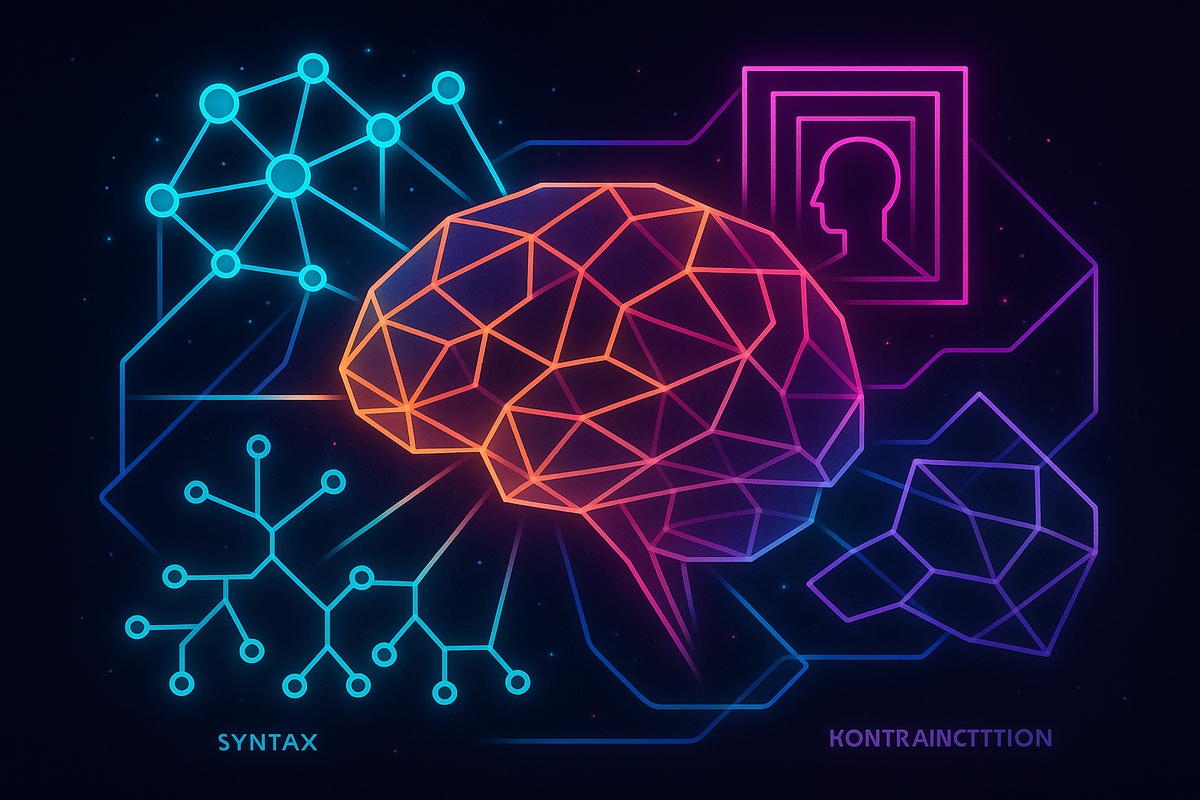
This isn't magic. It's the product of specific biological adaptations that together create what Michael Tomasello calls "the cultural intelligence hypothesis." Humans aren't just smarter apes. We're cultural apes—equipped with specialized cognitive machinery for creating, transmitting, and building on shared knowledge.
The Cognitive Toolkit
What makes cumulative culture possible? A suite of interconnected capacities that evolved together to support increasingly sophisticated social learning.
Imitation: Not Just Copying, But Understanding
Most animals that engage in social learning use emulation—they learn what outcomes to achieve by watching others, but figure out their own method. A rat sees another rat get food by pressing a lever. It learns that the lever produces food, but not necessarily how the other rat pressed it.
Humans use imitation—we copy not just outcomes but methods. We reproduce the specific actions we observe, even when they're causally irrelevant. This is called overimitation, and it's actually a feature, not a bug.
Why copy unnecessary steps? Because human cultural practices are often complex multi-step procedures where the causal structure isn't transparent. If you're learning to make bread, you might not understand why kneading matters. But if you faithfully copy the kneading, you get bread. Overimitation is a learning strategy optimized for acquiring opaque cultural knowledge.
The neural machinery for this is substantial. Mirror neurons fire when you perform an action and when you watch someone else perform it. The inferior parietal lobe integrates visual observation with motor planning. The process of watching and reproducing action engages a distributed system evolved specifically for high-fidelity cultural transmission.
Theory of Mind: Modeling What Others Know
You can't teach effectively if you can't model what the learner doesn't know. You can't learn from teaching if you can't infer the teacher's intention.
Theory of mind—the capacity to attribute mental states to others—is foundational for sophisticated cultural transmission. It allows for:
- Pedagogy: Active teaching that tailors information to the learner's state
- Selective trust: Evaluating who's a reliable source of knowledge
- Intentional copying: Understanding why someone did something, not just what they did
- Norm enforcement: Recognizing violations of shared expectations
Human theory of mind is both early-developing and remarkably sophisticated. By age four, most children pass false-belief tasks. By adolescence, humans can track nested intentionality several layers deep ("I think you think I think...").
This capacity likely coevolved with language and cultural complexity. Better mind-reading enabled better cultural transmission, which created selection pressure for even better mind-reading. The feedback loop spiraled upward, creating a species uniquely equipped for collective knowledge construction.
Language: Culture's Transmission Protocol
Language is the killer app for cumulative culture.
Yes, other forms of cultural transmission exist. You can learn by watching. You can learn through gesture. But language allows for:
- Abstraction: Talking about things not currently present
- Counterfactuals: Discussing what could be but isn't
- Instruction: Explaining procedures verbally
- Normativity: Articulating rules and expectations
- Correction: Providing feedback on performance
Language transforms cultural transmission from slow, error-prone imitation into rapid, explicit knowledge transfer. A skilled practitioner can verbally convey in minutes what might take hours or days to learn through observation alone.
The combinatorial nature of language means a finite set of words and grammatical structures can express an effectively infinite set of meanings. This makes language an extraordinarily efficient compression and transmission protocol for cultural information.
And critically, language allows for cumulative refinement of knowledge through discourse. Multiple individuals can contribute to understanding, critique each other's claims, and collectively arrive at better models than any individual could construct alone. Language doesn't just transmit culture—it enables collaborative cultural construction.
Norm Psychology: Enforcing Shared Standards
Humans have a distinctive psychology around norms—shared expectations about behavior that are actively enforced.
This shows up early. Toddlers protest when someone violates the rules of a game. Young children spontaneously correct adults who perform familiar tasks "incorrectly." This isn't learned behavior. It's norm psychology—an evolved suite of motivations and reactions that maintain cultural practices against drift.
Key features:
- Normative protest: Feeling violated when norms are broken
- Third-party punishment: Sanctioning norm violators even when you're not directly harmed
- Conformist bias: Preferring to do what most others do
- Reputation tracking: Remembering and caring about what others think of you
Norm psychology is what keeps cultural practices stable across individuals and across time. Without it, cultural variants would drift, merge, and mutate until no coherent tradition remained. Norm enforcement is the error-correction mechanism for cultural transmission.
The Extended Childhood: Time to Learn
Humans have the longest juvenile period of any primate, both absolutely and relative to lifespan. Human children don't reach reproductive maturity until their mid-to-late teens, and even then, full brain maturation continues into the mid-twenties.
This extended childhood serves an obvious function: cultural learning takes time.
The sheer volume of cultural knowledge a human needs to function in any society is staggering. Language acquisition alone takes years. Mastering subsistence skills requires extended practice. Understanding social norms, kinship systems, and local knowledge requires patient observation and instruction.
In genetic terms, extending childhood is costly. It delays reproduction and requires massive parental investment. But in dual inheritance terms, it's essential. The extended juvenile period is itself a biological adaptation enabling greater cultural capacity.
This is life history evolution shaped by cultural evolution. As human cultures became more complex, there was increasing selection pressure for children who could absorb more culture before reproducing. Longer childhoods allowed more learning. More learning enabled more complex culture. More complex culture created pressure for even longer childhoods.
The feedback loop produced the modern human developmental trajectory: a juvenility so extended that we're considered fully mature only after two decades of intensive cultural apprenticeship.
Prestige and Social Learning Biases
Humans don't learn from just anyone. We have social learning biases—heuristics for choosing who and what to copy.
Prestige bias is the most important. We preferentially learn from high-status individuals—those who are successful, admired, or central to the social network. This makes evolutionary sense: if you don't know the local optimum, copy whoever seems to be doing well.
The result is that prestigious individuals become cultural models—their behaviors, preferences, and practices get disproportionately transmitted. This creates runaway cultural dynamics where prestige can become self-reinforcing, and prestigious individuals can shape culture out of proportion to their actual competence.
Conformist bias is the tendency to adopt the most common variant. When in Rome, do as the Romans do. This bias stabilizes culture and allows for rapid adaptation to local conditions. If most people are doing X, X is probably adaptive in this environment.
Success bias focuses on outcomes. Copy whoever is succeeding, regardless of their prestige or frequency. This accelerates the spread of genuinely adaptive innovations.
Together, these biases create a sophisticated cultural learning strategy: when uncertain, copy the successful or prestigious; when you want to fit in, copy the majority; when you have time, experiment and innovate.
This is not conscious reasoning. It's evolved psychology—automatic heuristics that guide cultural learning without deliberate reflection.
Putting It Together: The Cultural Intelligence Hypothesis
Michael Tomasello's cultural intelligence hypothesis synthesizes these pieces: humans have a distinctive cognitive profile characterized by:
- High-fidelity imitation
- Advanced theory of mind
- Complex language
- Norm psychology
- Extended childhood
- Social learning biases
No other species has this full suite. And critically, these capacities coevolved. Each builds on the others. Language requires theory of mind to be useful. Imitation benefits from pedagogy. Norms stabilize what's learned. Extended childhood allows time for all of it.
The package isn't just quantitatively different from other primates. It's a qualitatively distinct cognitive architecture optimized for cumulative cultural evolution.
We're not just apes with bigger brains. We're apes whose brains evolved to construct and maintain shared cultural worlds—environments of inherited knowledge that exist between minds rather than just within them.
The Coherence Scaffolding
In AToM terms, what humans evolved is the capacity to maintain coherence not just individually but collectively and cumulatively.
Cultural transmission is a mechanism for propagating coherence across individuals and across time. The cognitive equipment described here—imitation, theory of mind, language, norm psychology—are all tools for establishing and maintaining shared coherence structures.
When you learn to make bread, you're not just acquiring motor skills. You're entrained to a coherent practice that thousands before you have refined. The knowledge exists not in any one mind but in the structure of transmission itself—preserved, error-corrected, and extended across generations.
This is distributed coherence construction. And it's only possible because humans evolved the biological machinery to participate in it.
This is Part 3 of the Gene-Culture Coevolution series, exploring how genes and culture evolve together to make humans uniquely human.
Previous: Dual Inheritance: How Genes and Culture Evolve Together
Next: Cultural Attractors: Why Certain Ideas Keep Emerging
Further Reading
- Tomasello, M. (1999). The Cultural Origins of Human Cognition. Harvard University Press.
- Heyes, C. (2018). Cognitive Gadgets: The Cultural Evolution of Thinking. Harvard University Press.
- Henrich, J. (2016). The Secret of Our Success. Princeton University Press.
- Csibra, G., & Gergely, G. (2009). "Natural pedagogy." Trends in Cognitive Sciences, 13(4), 148-153.
Comments ()