You Are a Constructor: The Task Your Nervous System Performs
Your nervous system performs the continuous task of maintaining coherence. Identity is an ongoing performance, not a fixed entity—learn how this reframes psychological health and trauma.
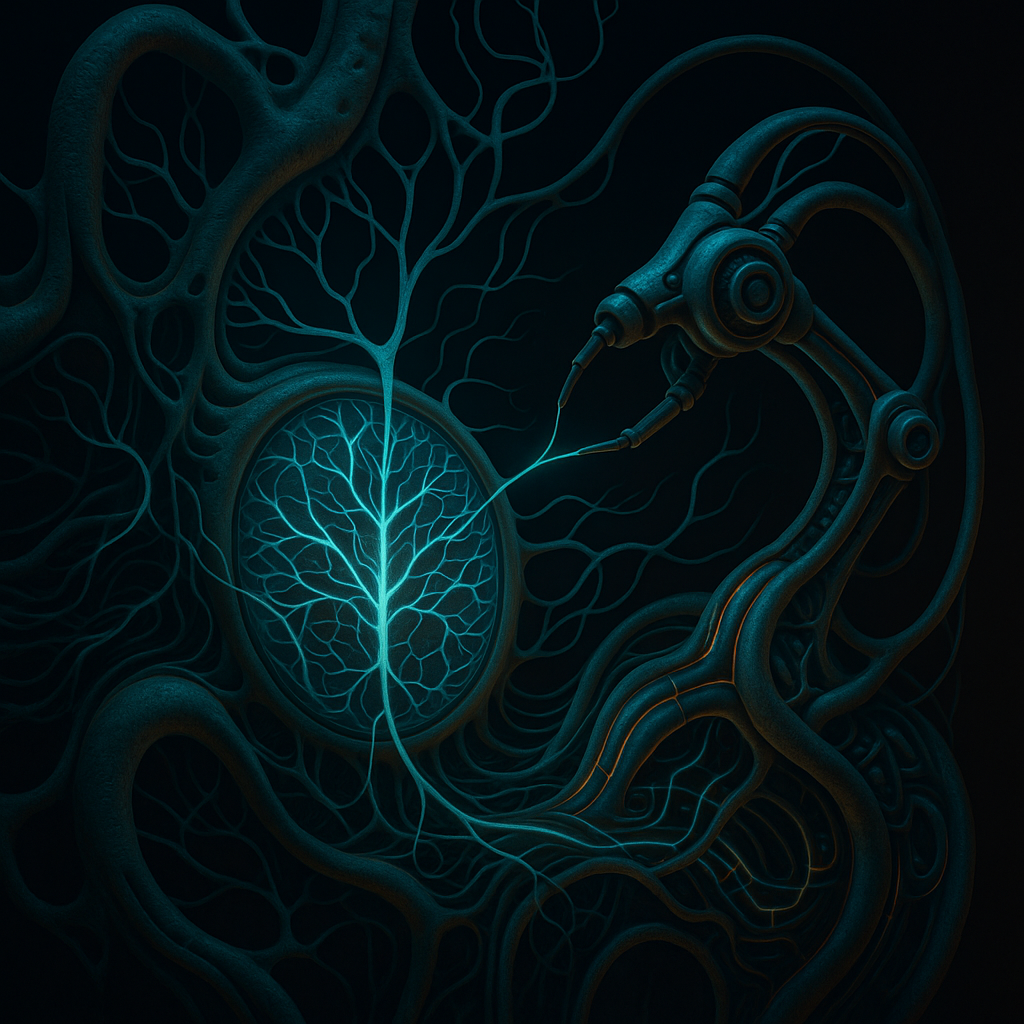
You Are a Constructor: The Task Your Nervous System Performs
Formative Note
This essay represents early thinking by Ryan Collison that contributed to the development of A Theory of Meaning (AToM). The canonical statement of AToM is defined here.
You are not a thing. You are a process.
This isn't poetry. It's physics. A constructor, in the technical sense we've been developing, is something that performs a transformation and remains able to perform it again. It's defined not by what it's made of but by what it does.
You are a constructor. More precisely: your nervous system, your body, your self is a constructor that performs a specific task. Understanding what that task is—and what it means to perform it well or poorly—is understanding what you are at the deepest level the mathematics can reach.
The task is coherence maintenance. The transformation is: take perturbation, integrate it, maintain structure. Over and over. Every moment. For as long as you exist.
This is what you do. Not what you are but what you do. The doing is prior. The being follows.
The Task Defined
Every constructor performs a task. The task has inputs, outputs, and a transformation that connects them.
For the coherence constructor—for you—the task looks like this:
Inputs: Sensory data. Prediction errors. Emotional perturbation. Social signals. Metabolic variation. The entire stream of what impinges on you from outside and arises from inside.
Outputs: Integrated experience. Updated beliefs. Regulated emotion. Appropriate action. Maintained identity. Continued function.
Transformation: Take the inputs—chaotic, noisy, potentially overwhelming—and produce the outputs—organized, coherent, functional. Convert disorder into order. Integrate disturbance into structure. Maintain the self that is doing the maintaining.
This is the coherence task. It's not optional. If you stop performing it, you stop existing as a coherent system. You might still exist as matter, as biology, but not as a self. The self is the constructor performing the task.
And it never stops. Sleep isn't a break from the task; it's a different mode of performing it. Rest isn't cessation; it's consolidation. As long as you're alive, the constructor is running.
What It Means to Perform the Task Well
A constructor performs its task well when it succeeds—when the transformation actually happens, when the outputs are produced, when the constructor remains able to perform the task again.
For the coherence constructor, performing well means:
Prediction errors get integrated. The world surprises you; you update. The surprise is absorbed into a revised model. The error becomes knowledge rather than accumulating as chronic mismatch.
Emotions get regulated. Affect arises; it's modulated. Intense states peak and resolve. The system returns to baseline without getting stuck at extremes.
Identity persists. Across all the changes—all the inputs, all the transformations—something continuous remains. You at 20 and you at 50 are different, but there's a thread. The constructor maintains continuity through change.
Action serves function. What you do helps you survive, helps you connect, helps you grow. Action isn't random; it's purposive. The constructor produces behavior that works.
Capacity remains. After performing the task, you can perform it again. The constructor isn't depleted to the point of failure. There's sustainability—the task can be done tomorrow too.
This is coherence. Not a state you achieve but a task you perform. The performance can be better or worse, more or less costly, more or less sustainable. But it's always performance—always active, always ongoing.
What It Means to Perform Poorly
A constructor performing poorly fails at some aspect of the task. The transformation breaks down. The outputs degrade. The constructor damages itself in the process.
Prediction errors accumulate. The world surprises you, and you don't update. Or you update chaotically, whipsawing between models. The mismatch between prediction and reality becomes chronic. This is anxiety—the system constantly detecting error without being able to resolve it.
Emotions dysregulate. Affect arises and doesn't modulate. You get stuck at extremes—chronic high activation or chronic flatness. The system can't return to baseline. This is depression, panic, rage disorders—constructors stuck in states they can't exit.
Identity fragments. The thread of continuity breaks. There's no stable self across contexts, across time. Or identity becomes rigidly fixed, unable to change even when change is needed. Fragmentation and rigidity are both failures of the identity-maintenance part of the task.
Action serves nothing. Behavior becomes random, compulsive, counterproductive. The constructor produces outputs that don't help—that actively harm. Addiction, self-destruction, paralysis—outputs that don't serve function.
Capacity depletes. Performing the task exhausts resources faster than they recover. The constructor is running itself down. Each day there's less capacity for the next. This is burnout—the constructor destroying itself through its own operation.
Poor performance isn't moral failure. The constructor is trying. But the task is hard, and the machinery is vulnerable. Damage, developmental problems, environmental assault—many things can impair the constructor. The impairment isn't choice; it's damage.
Constructor Damage
What damages a coherence constructor?
Overwhelming input. The task assumes input can be processed. But input can exceed processing capacity. Trauma is input that overwhelms—transformation that the constructor can't perform, information that can't be integrated. The unintegrated experience damages the constructor itself. It's not just that the task failed once; it's that the failure warped the machinery.
Sustained overload. Even sub-traumatic input, sustained long enough, depletes the constructor. Chronic stress isn't single overwhelming events; it's continuous demand exceeding continuous capacity. The constructor runs hot until it breaks.
Developmental failure. The constructor must be built. Development is the process of building it. If development goes wrong—inadequate input, harmful input, missing input—the constructor that results may be impaired from the start. It was never built right, so it can't perform right.
Decay. Constructors can age, degrade, erode. The machinery that performs the task can wear out. Neurodegeneration is constructor decay at the biological level. Despair is constructor decay at the meaning level—the gradual failure of the meaning-maintenance function.
Architectural mismatch. Some constructors are built for environments that don't match the environments they encounter. A nervous system calibrated for one context may fail in another. Not because it's broken but because it's mismatched. The task it's good at isn't the task it faces.
When we talk about psychological dysfunction, we're often talking about constructor damage. Something impairs the ability to perform the coherence task. The impairment has causes—developmental, traumatic, environmental, biological. Understanding the damage helps target repair.
Constructor Repair
Damaged constructors can sometimes be repaired. Not always, not completely, but often enough to matter.
Remove the damaging condition. If the damage comes from environment, changing environment can help. Leaving the abusive relationship. Exiting the toxic job. Escaping the impossible situation. The constructor can't repair while the damage continues.
Provide missing input. If development missed something, providing it later can help. The secure attachment that didn't happen in childhood can happen in therapy. The skills that weren't learned can be learned now. The constructor can be built out, not just repaired.
Rebuild the machinery. Neural plasticity is real. The structures that perform the coherence task can change. Therapy, medication, practice—these can literally restructure the constructor. The rebuilding is slow and effortful, but it's possible.
Couple with external constructors. If your own constructor is damaged, other constructors can help. The therapist as external coherence source. The partner as co-regulator. The community as support system. External constructors perform part of the task while the internal constructor repairs.
Reduce task demand. If the constructor can't perform at full demand, reduce the demand. Simplify life. Lower expectations temporarily. Create conditions where a damaged constructor can succeed at a scaled-down version of the task, building capacity for more.
This is what healing is: constructor repair. The methods vary—talk therapy, medication, behavioral change, relational support—but the function is the same. Restore the constructor's ability to perform its task.
The Self as Constructor
Here's the philosophical claim: the self is the constructor.
Not "the self has a constructor" or "the self uses a constructor." The self is the ongoing performance of the coherence task. It's what the constructor does. When the constructor stops performing the task, the self ceases to exist (even if the body continues).
This is strange from an essentialist perspective. We're used to thinking selves have essences—some core identity that exists prior to action, independent of performance. The constructor view says no: selves are doings, not beings. The performance is the self.
This has implications.
Identity is achievement, not given. You don't have an identity that you then express. You continually achieve identity through the performance of the coherence task. If the performance changes, the identity changes. If the performance stops, the identity ends.
Continuity requires work. The self persists not automatically but through ongoing construction. The same constructor, performing the same task, produces the continuity we call a persistent self. Interruptions in the task are interruptions in the self.
The self can change while remaining the same. The task can be performed differently over time. The constructor can learn, can adapt, can transform. These changes don't destroy the self because the self is the constructing, not the particular form the construction takes at a given moment.
Multiple selves aren't contradiction. If the self is performance of a task, different performances in different contexts aren't threats to unified identity. They're the constructor adapting its task performance to circumstances. Multiplicity is flexibility, not fragmentation—unless the multiplicities can't communicate, in which case the constructor has actually split.
The self-as-constructor view demystifies some things that essentialism makes mysterious. How can people change yet remain themselves? Because the constructor changes its operation. How can people have different selves in different contexts? Because the task is performed contextually. How can identity break down? Because the constructor fails or fragments.
Performing the Task Together
Constructors can couple.
Two people in relationship are coupled constructors. Each performs their own coherence task, but the performances interlock. My regulation affects your regulation. Your coherence supports my coherence. We're not just two constructors side by side; we're a coupled system performing a joint task.
The joint task is relationship maintenance—the transformation that takes two individuals and produces a functioning dyad. The dyad is itself a constructor at a higher level, maintaining its own coherence, performing its own task.
Entrainment is constructor coupling. When two systems synchronize—physiologically, psychologically, behaviorally—their constructors are coordinating. The tasks become interdependent. The performances align.
Co-regulation is task sharing. When I help you regulate, I'm performing part of your coherence task. My constructor extends into your construction. This isn't weakness or dependence; it's the normal way coupled constructors work. We're not separate machines; we're networked.
Relationship repair is coupled constructor repair. When relationship breaks down and then heals, what's happening is that the coupled system—the dyadic constructor—is being repaired. The joint task is restored. The performances realign.
This explains why relationships matter so much for individual coherence. We're not isolated constructors performing our tasks alone. We're nodes in a network of coupled constructors, each supporting and supported by others. Damage to the network damages individual constructors. Repair of the network repairs them.
The isolated self performing its coherence task unaided is a fiction. Real constructors are coupled. Real coherence is distributed. Real selves are relational not just emotionally but structurally—the constructor that produces you is partly located in others.
The Constructor Runs All the Time
You can't stop being a constructor.
Sleep doesn't stop it—the task continues in altered mode. Relaxation doesn't stop it—baseline maintenance is still maintenance. Even unconsciousness doesn't stop it—the biological coherence task continues even when the psychological task pauses.
This has implications for how you think about rest, about effort, about life.
You're always working. The coherence task is work. It requires resources. It produces fatigue. Even doing "nothing," the constructor is running. Rest is task reduction, not task cessation.
Sustainability matters. A constructor that can't sustain its operation will fail. The task must be performed at a level the constructor can maintain. Chronic over-performance leads to breakdown.
The task can become easier. Learning, development, healing—these can make the task easier. A well-functioning constructor performs coherence with less effort. Ease isn't laziness; it's efficiency.
The task can become harder. Stress, damage, environmental change—these can make the task harder. A burdened constructor must work harder to achieve the same coherence. Difficulty isn't weakness; it's load.
The always-running constructor is why burnout happens to people who "aren't doing anything." They're doing something—they're maintaining coherence under conditions that make it hard. The task that looks invisible from outside is consuming resources on the inside. The constructor is straining even when no one can see.
Living as a Constructor
What changes if you understand yourself as a constructor?
You attend to capacity. Is your constructor well-resourced? Does it have what it needs to perform the task? Sleep, nutrition, connection, stimulation, rest—these are constructor resources. Neglecting them is neglecting the machinery that produces you.
You respect the task. Maintaining coherence is hard work. It deserves respect. The difficulty you feel in holding yourself together under pressure isn't failure; it's the reality of the task. The task is difficult. Acknowledge that.
You seek appropriate coupling. Which other constructors support yours? Which ones drain it? Who helps you perform your task, and who makes it harder? Coupling isn't just emotional preference; it's structural engineering. Choose couplings that support construction.
You repair when damaged. Damage happens. The question isn't whether your constructor will ever be impaired, but what you do when it is. Seek repair. Accept help. Don't pretend the damage doesn't exist.
You build for the long term. The task must be performed indefinitely. Short-term performance that damages long-term capacity is bad engineering. Build a constructor—build a life—that can keep running.
You are a constructor. The task is coherence. The performance is your life.
What kind of constructor are you building?
Comments ()