Constructor Theory
What if physics asked the wrong question?
Traditional physics asks: “Given these initial conditions, what happens next?” Constructor theory asks something different: “What transformations are possible, and what makes them possible?”
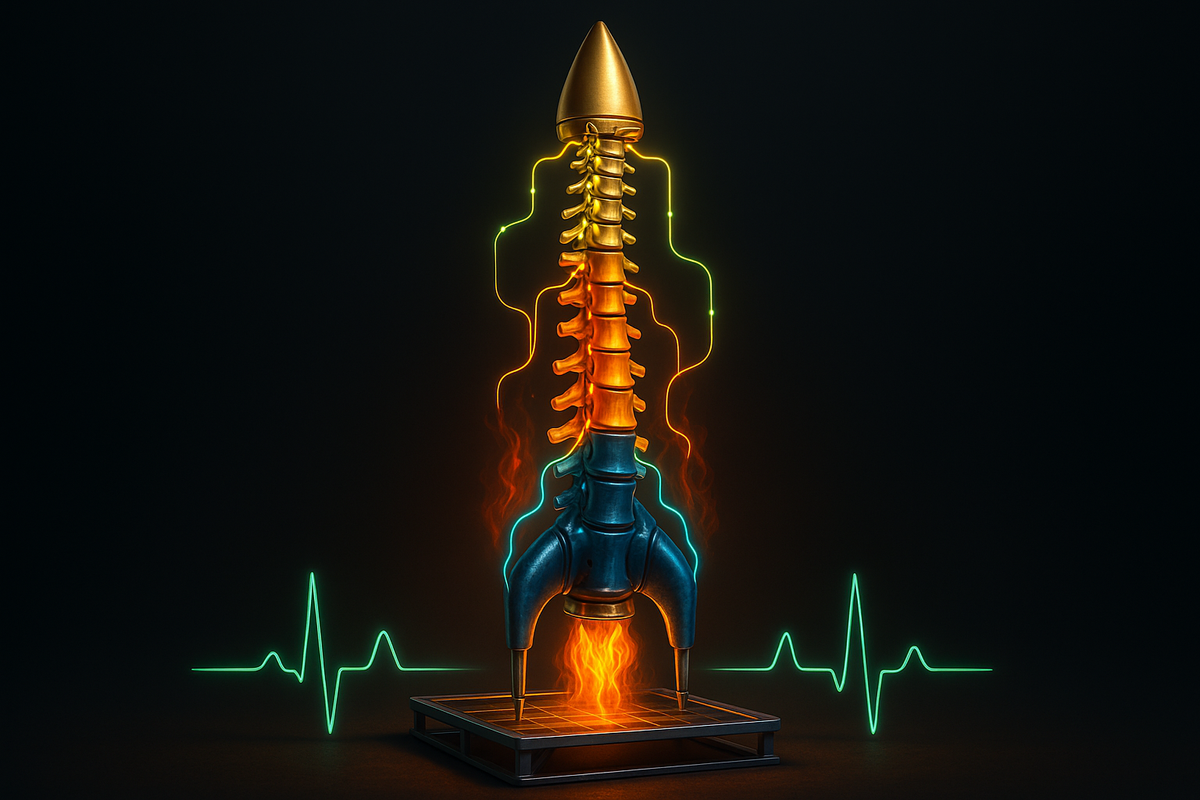
David Deutsch and Chiara Marletto developed constructor theory as a new foundation for physics—one that puts possibility and impossibility at the center rather than prediction and dynamics. A constructor is anything that can cause a transformation and remain unchanged, ready to cause it again. Your cells are constructors. Your nervous system is a constructor. You are a constructor.
This shift in framing has profound implications for understanding coherence, meaning, and what it takes for systems to persist.
Why This Matters for Coherence
Constructor theory provides a different angle on coherence: instead of asking “how does this system behave?” it asks “what can this system do, and what enables it to keep doing it?”
A coherent system is one that can reliably perform its characteristic transformations. Trauma isn’t just a state—it’s a reduction in what transformations remain possible. Healing isn’t just feeling better—it’s restoring constructor capacity. Meaning isn’t just subjective experience—it’s the set of counterfactual possibilities your existence enables.
This framework connects to AToM by providing the vocabulary for discussing possibility space, counterfactuals, and what it means for a system to maintain itself as a reliable cause of specific effects.
What This Series Covers
This series introduces constructor theory and its implications for understanding minds, selves, and meaning. We’ll examine:
- The fundamental reframing: from dynamics to possibility
- Category theory as the mathematics of structure-preserving transformation
- Functors and how patterns persist across scales
- The compositionality problem: why coherent parts don’t guarantee coherent wholes
- Natural transformations and therapeutic equivalence
- What physics can and can’t tell psychology
- Constructor theory’s core claim: possibility is fundamental
- You as a constructor: the task your nervous system performs
- Counterfactuals and the geometry of what could happen
- Why this isn’t metaphor: mathematical architecture in minds
- The hydrogen anchor: one geometric principle from atoms to coherence
Articles in This Series
- Category Theory for People Who Hate Math (But Love Patterns)
- Functors: How Structure Survives the Jump Between Scales
- The Compositionality Problem: Why Coherent Parts Don’t Guarantee Coherent Wholes
- Natural Transformations: When Different Paths Lead to the Same Place
- What Physics Can’t Tell Psychology (And What It Can)
- Constructor Theory: Reframing Everything as “What Transformations Are Possible?”
- You Are a Constructor: The Task Your Nervous System Performs
- Counterfactuals and Possibility Space: The Geometry of “What Could Happen”
- Why This Isn’t Metaphor: The Mathematical Architecture Beneath Meaning
- The Hydrogen Anchor Revisited: From Atoms to Coherence in One Geometric Principle
Part of the SCIENCE collection, Foundations sub-hub. This series provides an alternative mathematical foundation complementing Information Geometry. For category theory applications, see also Applied Category Theory.
Comments ()