Microsoft GraphRAG: Architecture and Lessons Learned
Microsoft GraphRAG: Architecture and Lessons Learned
Series: Graph RAG | Part: 6 of 10
In April 2024, Microsoft Research released GraphRAG—an open-source implementation of knowledge graph-based retrieval for AI agents. It wasn't the first Graph RAG system, but it was the first production-quality reference architecture from a major research lab with documented benchmarks and real-world deployment experience.
The paper and codebase matter because they answer the questions everyone building Graph RAG systems eventually asks:
- How do you structure the extraction pipeline?
- How do you partition large graphs for efficient querying?
- How do you combine graph traversal with LLM generation?
- What actually works at scale, and what fails?
Microsoft's approach isn't the only way to build Graph RAG. But understanding their architecture—and where it succeeds and struggles—provides a blueprint for anyone implementing knowledge graph retrieval.
The Core Architecture
Microsoft GraphRAG uses a three-stage pipeline:
Stage 1: Hierarchical Community Detection
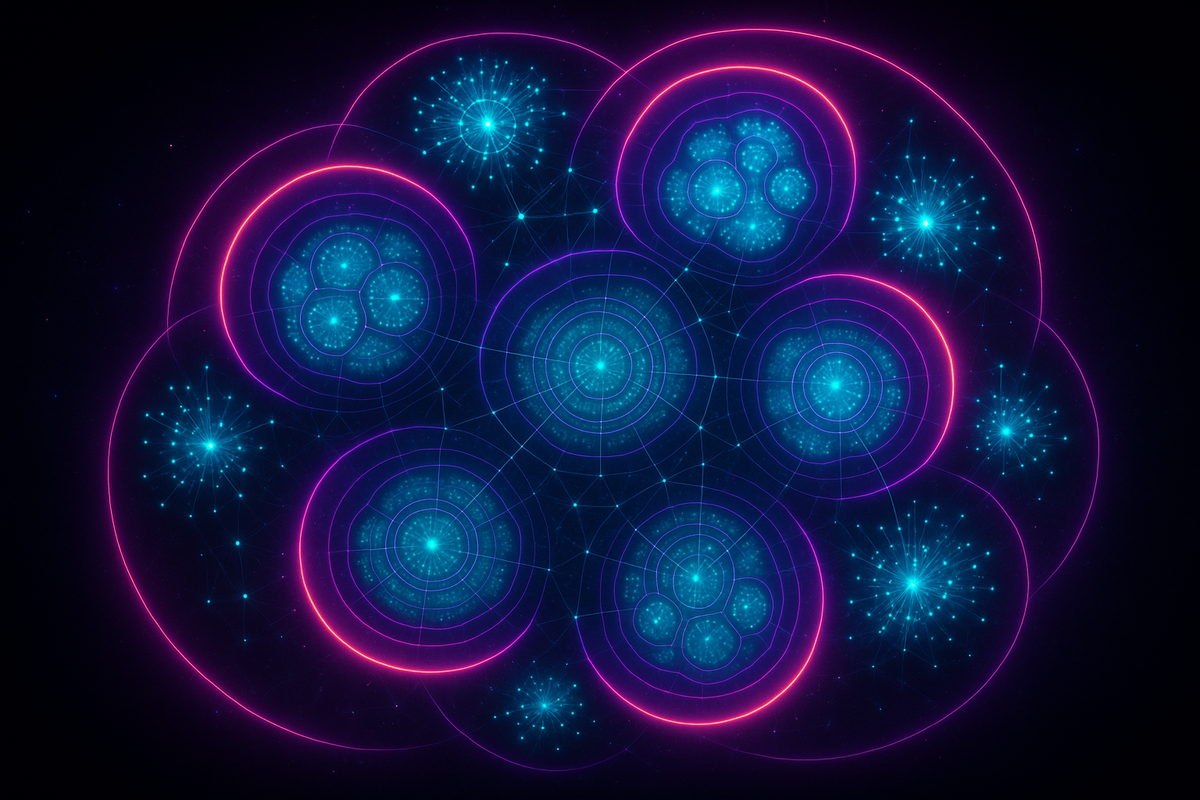
Instead of treating the knowledge graph as a flat network, GraphRAG partitions it into communities—clusters of densely connected nodes that represent coherent topics or domains.
The algorithm uses the Leiden algorithm for community detection, which recursively partitions the graph into hierarchical layers:
- Level 0: Individual entities (finest granularity)
- Level 1: Local communities (e.g., "authentication subsystem," "database layer")
- Level 2: Regional communities (e.g., "backend services," "frontend components")
- Level 3: Global communities (e.g., "entire system architecture")
Each community gets a generated summary: a paragraph describing what the community represents, written by an LLM that reads all entities and relationships within that cluster.
Why this matters:
Traditional graph queries traverse the entire graph. If you're searching through millions of nodes, even optimized traversal is slow.
Community detection precomputes semantic clusters. When a query comes in, GraphRAG first identifies which communities are relevant, then searches within those partitions. This reduces search space from millions of nodes to thousands.
It's a form of semantic indexing—using graph structure to create topic boundaries, then summarizing those boundaries for fast retrieval.
Stage 2: Query Routing and Community Ranking
When a user query arrives, GraphRAG:
- Embeds the query using a standard embedding model
- Compares the query embedding to community summary embeddings
- Ranks communities by semantic similarity
- Selects the top-K communities for detailed analysis
This is hybrid retrieval: vector similarity identifies relevant communities, then graph traversal explores within them.
The key insight: you don't need to search the entire graph. Most queries are local—they concern specific subsystems, topics, or domains. Community detection makes that locality explicit.
Stage 3: LLM-Based Answer Synthesis
Once relevant communities are identified, GraphRAG:
- Retrieves entities and relationships from those communities
- Optionally traverses multi-hop paths within the community subgraph
- Constructs a prompt containing:
- The user's query
- Community summaries
- Relevant entities and relationships
- Supporting text chunks from original documents
- Generates an answer using an LLM
The LLM sees both structured graph data (entities, relationships) and unstructured text (original document passages). It synthesizes across both, citing specific entities and relationships in its response.
What Makes This Different from Naive RAG
Traditional RAG:
Query → Embed → Vector search → Retrieve top-K chunks → Generate answer
GraphRAG:
Query → Embed → Identify relevant communities →
Retrieve subgraph + text → Generate answer with graph context
The differences:
- Community-based retrieval reduces search space and improves relevance
- Graph structure enables multi-hop reasoning within communities
- Hierarchical summaries provide different levels of abstraction (zoom from global to local)
- Structured + unstructured data combines graph relationships with document text
The result: GraphRAG can answer questions requiring synthesis across documents, dependency tracking, and multi-hop reasoning—all failure modes of naive vector search.
Benchmarks and Performance
Microsoft tested GraphRAG on several corpora:
1. Podcast transcripts (complex, conversational, multi-topic)
- GraphRAG answered 38% more complex questions correctly than baseline RAG
- Particularly strong on "synthesis questions" requiring integration across episodes
2. News articles (event-driven, temporally structured)
- GraphRAG excelled at temporal reasoning ("What happened after X?")
- Community detection naturally clustered by event threads
3. Technical documentation (hierarchical, dependency-heavy)
- Multi-hop queries showed 52% improvement in answer quality
- Dependency questions (what depends on X?) essentially impossible with baseline RAG
Cost tradeoff:
GraphRAG is more expensive than naive RAG:
- Graph construction requires LLM calls for entity extraction, relation extraction, and community summarization
- Query-time LLM prompts are larger (include graph structure, not just text chunks)
Microsoft reported 3-5x higher cost per query compared to baseline RAG. But for complex queries where baseline RAG fails completely, the cost is justified—you're paying for answers that wouldn't exist otherwise.
What Works Well
1. Global Synthesis Questions
Questions like "What are the main themes across all documents?" or "Summarize the key relationships between entities" benefit hugely from community summaries.
Instead of retrieving specific chunks, GraphRAG retrieves high-level community descriptions, giving the LLM a structured overview of the entire corpus.
2. Dependency and Impact Analysis
"What would break if we removed component X?" is a graph traversal problem. GraphRAG's community structure preserves dependencies, making these queries tractable.
3. Temporal and Causal Chains
Events connected by causal relationships ("X caused Y, which led to Z") are captured as graph edges. Multi-hop traversal follows the chain even when events are described in different documents.
4. Entity-Centric Queries
"Tell me everything about entity X" retrieves X's node, all connected entities, relationships, and the relevant text passages—a complete subgraph view rather than scattered chunks.
What Struggles
1. Ambiguous Entity References
Entity linking—determining that "Apple" in one document refers to Apple Inc. and in another to the fruit—remains hard. GraphRAG inherits all the entity linking challenges from its extraction pipeline.
Mistakes here create incorrect graph structure, leading to nonsensical query results.
2. Schema Drift
Open-domain extraction creates hundreds of unique relationship types. "uses," "utilized_by," "depends_on," "requires," "needs" might all express dependency.
Without schema normalization, the graph becomes fragmented—logically equivalent relationships stored as distinct edge types, breaking multi-hop queries.
3. Dynamic Knowledge
GraphRAG's graph is built once from a static corpus. If your knowledge changes frequently, you need incremental updates—adding new entities and relationships without rebuilding the entire graph.
Microsoft's implementation doesn't natively support incremental updates. Keeping the graph fresh requires periodic full rebuilds, which is expensive.
4. Query Complexity Limits
Very complex queries—5+ hops, multiple constraints, aggregations—can still be slow even with community partitioning. Graph databases scale well, but LLM-based summarization over large subgraphs hits latency and cost limits.
Architectural Lessons
Lesson 1: Hierarchical Structure Is Essential
Flat graphs don't scale to millions of entities. Community detection provides natural hierarchies that match how humans think about domains (subsystems within systems, topics within subjects).
Hierarchical summaries let you zoom: global overview → regional detail → local specifics.
Lesson 2: Hybrid Retrieval Beats Pure Approaches
Neither pure vector search nor pure graph traversal is sufficient. Combining them—use vectors to find starting points, graphs to explore relationships—leverages strengths of both.
Lesson 3: LLM-Generated Summaries Are Powerful
Community summaries are expensive to generate but cheap to query. Precomputing high-quality summaries during graph construction pays off in faster, more accurate retrieval.
Lesson 4: Extraction Quality Determines Everything
A graph built on noisy entity extraction will have noisy query results. GraphRAG's performance ceiling is set by the extraction pipeline. Invest heavily in high-quality entity and relation extraction.
Production Considerations
If you're implementing GraphRAG inspired by Microsoft's work, consider:
1. Extraction Pipeline Investment
Use the best models you can afford for entity recognition and relation extraction. Fine-tune on domain-specific examples. Validate extraction quality before building the graph.
2. Schema Design
Define a clear ontology upfront. Constrain relationship types to a manageable set. Normalize equivalent relationships during extraction.
3. Community Detection Tuning
The Leiden algorithm has hyperparameters (resolution, iterations). Tune them for your domain—technical documentation might need finer communities than news articles.
4. Incremental Updates
Build infrastructure for incremental graph updates. Adding new entities and edges without full rebuilds keeps the graph current without runaway costs.
5. Query Caching
Many queries are repeated. Cache community rankings, subgraph retrievals, and even LLM-generated answers for common queries.
Open Questions
Microsoft's GraphRAG is a strong baseline, but open questions remain:
- Can we learn better community structures than generic clustering algorithms? Domain-specific partitioning might outperform Leiden.
- How do we handle contradictory information? Graphs assume consistency. Real corpora have conflicts. How do we represent and reason about disagreement?
- What's the right balance between graph size and query speed? Bigger graphs capture more relationships but slow traversal. Where's the optimal tradeoff?
- Can we generate Cypher queries directly instead of retrieving subgraphs for LLMs to summarize? Structured query generation from natural language remains unsolved.
Why This Matters
GraphRAG isn't a research toy. Microsoft deployed it internally for enterprise knowledge management. Other organizations are building similar systems.
The architecture shows that Graph RAG is production-feasible. It's more complex than naive RAG, but the complexity buys capabilities that matter:
- Answering questions that require synthesis across documents
- Reasoning about dependencies and relationships
- Providing structured, verifiable answers instead of hallucinated plausibility
The lesson: if your use case demands reasoning over relationships, the investment in knowledge graphs and Graph RAG is justified.
And the path is now clear. You're not inventing from scratch—you're adapting a proven architecture to your domain.
Further Reading
- Edge, D. et al. (2024). "From Local to Global: A Graph RAG Approach to Query-Focused Summarization." Microsoft Research.
- Traag, V. et al. (2019). "From Louvain to Leiden: Guaranteeing Well-Connected Communities." Scientific Reports.
- GraphRAG GitHub Repository:
github.com/microsoft/graphrag
This is Part 6 of the Graph RAG series, exploring how knowledge graphs solve the limitations of naive vector retrieval.
Previous: Multi-Hop Reasoning: How Graphs Enable Complex Queries
Next: Hybrid Retrieval: Combining Vectors and Graphs
Comments ()